

Overview
Our story
Overview
Our story
“Those who keep a tradition alive are not those who conform, but rather, they are those who transform”
Robert Gerhard
Our quartet is a story of vital friendship. We have known each other since childhood and we have always shared a passion for playing music and learning.
We grew to realise that playing as a quartet should be the main endeavour of our lives - because our shared dedication, our friendship bond, our love of music and the chemistry between us in doing so were all so strong, and because the differences between our personalities makes our music all the more vivid.
Robert Gerhard was a Catalan composer. He was born in Valls, which is very near our birth place in Catalunya, and he was a pupil of Schoenberg at the beginning of the 20th century. Thanks to Gerhard, people like Webern and Schoenberg himself were regular visitors to Barcelona. One can read in their correspondence how amazed they were by the city and the culture at that time, just before the civil war and fascism killed any progress in Spain.
That's why we took the name of Gerhard, because he was a resolute man; he joined the avant garde movement of that time and he fought for his idea of music in a way we strongly identify with.
bio
bio
Biography
'' The Quartet Gerhard clearly responds to the question why art exists. Its four members commit themselves completely and without ado to their vocation and dedicate themselves with conviction and devotion to serving the best music - including an intelligent choice of contemporary repertoire - to explain, without words, its meaning or, at least, in the best possible conditions offered by the live experience of a concert - to confront us with the mystery of art. ''
- Ramon Humet, composer
The Quartet Gerhard is distinguished for a remarkable sensitivity for sound and for an inner respect for music as the highest link between human beings.
As a quartet, they have their main roots in Basel (Rainer Schmidt), Berlin (Eberhard Feltz), Hannover (Oliver Wille). They have also worked with other great personalities such as György Kurtág, András Schiff and Ferenc Rados.
Prize winners of several national and international competitions, they take part in venues such as the Chamber Music Series at the Stadt-Casino Basel (Switzerland), the Bordeaux String Quartet Festival and Radio France Festival Montpellier (France), Elbphilharmonie Hamburg (Germany), the Musikamera series in La Fenice (Italy) the 'Palau de la Música' and Chamber Music Series L’Auditori (Barcelona) and the Muzenforum Concerten Bloemendaal (Holland), among others. It is also remarkable their commitment to music of new creation, appearing in important venues such as the CNDM series in Madrid, Nuit de la Création in Aix-en-Provence and in the series of the Arnold Schoenberg Center in Vienna. From 2023 they are taking part of the Merita Platform which gives them a relevant international projection.
Among other long term projects stands out the String Quartet Academy in Vic (Barcelona), founded by Gerard Claret and Cuarteto Casals. Within this academy they are once per year involved as teachers in the task of conveying the beauty of chamber music making.
Surpassing their early and enthusiastic praise, Quartet Gerhard has shown, beyond all expectation, how talent and perseverance lead to success. The impeccable work of Quartet Gerhard, particularly in the sound, added to the univocal direction they have taken to becoming an established string quartet (something more than four excellent musicians playing together), explains their recognition and reach. With a critically acclaimed debut album under their belt, a good handful of reviews and a calendar of diverse concerts, Gerhard Quartet offers creative programs that are evidently complex and, to a certain extent, complementary. Repertoires aimed at taking deeper breaths from an already common, shared source. Their poetry expressed in that which is strictly musical but also in that which encases it, mature beneath the presentation of these new programs. A path that forges ahead, towards its own horizon.
Their performances have been broadcasted by Catalunya Radio and RNE (Spain), NDR and SWR (Germany) on a regular basis. Among their discography we can find the CD-Album ‘Portrait’, supported by the new label Seed Music (Spain, 2016), a release with music by Kurtag, Schumann and Berg by Harmonia Mundi International and the CD Ad Astra with works by Debussy & Ramon Humet by Klarthe (2023). They also have been part of the documentary “Revolutionary Quartet. L’enigma Gerhard” by Xavier Bosch & Josep Badell, winner of the prestigious INEDIT prize 2023.
Coming projects include a new album with works by Bach, Shostakovich and Tchaikovsky and concerts with G. Enescu chamber music works with the pianist Josu de Solaun.
NEW PROJECT: "In memory of beauty"
NEW PROJECT: "In memory of beauty"
Shostakovich cycle

photo by Josep Badell
The Soviet composer Dmitri Shostakovich left us fifteen exceptional string quartets, all of them bearing witness to his turbulent life. In Quartets No. 5 and No. 8, we hear one of the composer’s milestones: the four-note main theme built from an abbreviation of his name, DSCH, which in German notation becomes D – E♭ – C – B. In the fifth quartet, it appears only fleetingly in the viola part.
Between these two quartets lies the Seventh Quartet, a compact work whose musical material becomes concise and striking, where tragedy and the grotesque go hand in hand. The concert concludes with Quartet No. 8, perhaps the best-known of the cycle. Here, the DSCH theme becomes the leitmotif that structures the entire score. With a somber character, like a requiem dedicated to himself, the work mourns the horrors of war. All three works are performed attacca (without pause).
string quartets n.5, 7 & 8
Praise follie
Praise follie
“Praise of follie”

Edgar Degas
This proposal arises from a desire to understand how extreme experiences can impact us. We focus on emotions as a key element in the face of complex psychological processes. Using a program that blends separate movements, we explore the shadows of the soul and desire.
Bach Choral C Major - Bartók n.6 (III. Mesto - Burletta) - Schumann op.51/3 (Adagio) - Schubert “Erlkonig” - Schubert quartet n.15 (III.) - Janácek quartet n.1 (III.) - Alban Berg Lyric Suite (IV.) - Shostakovich quartet n.10 (II.) - Schubert n.14 (II.) - Tchaikovsky quartet n.1 (II.) - Beethoven op.135 (IV.)
sound of color
sound of color
Balances
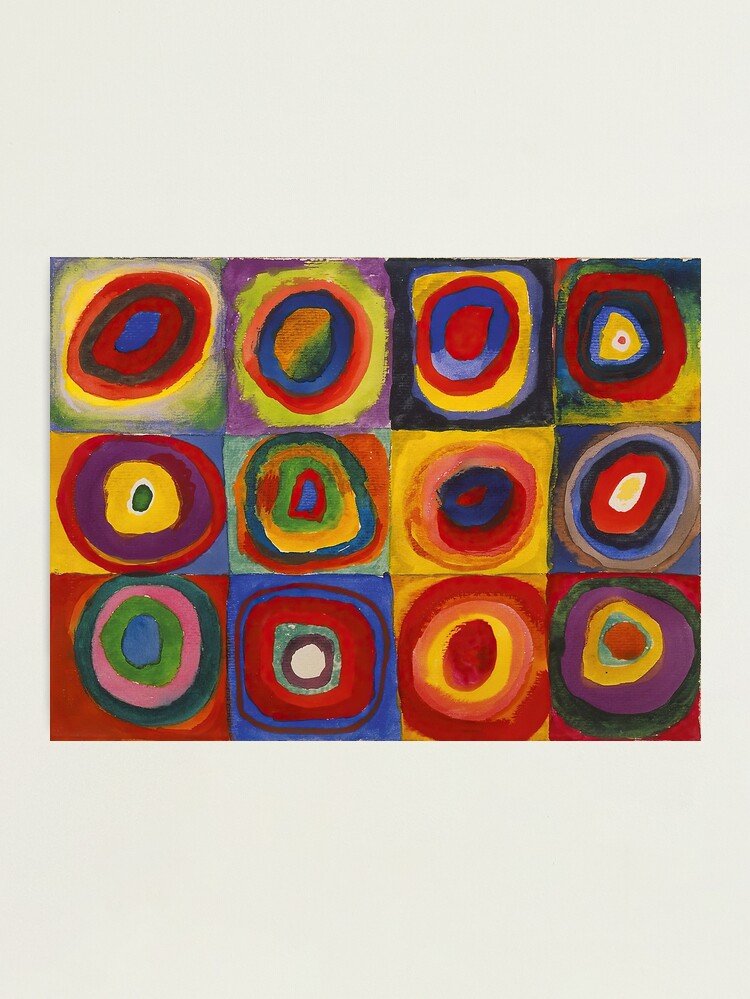
V. Kandinski
In A Plan & Elevation, Caroline Shaw takes architecture as a reference in the formal exploration of the string quartet. Fragments from the quartets of Maurice Ravel and Wolfgang Amadeus Mozart merge with Shaw’s unique sonic universe.
The program continues with Ravel’s luminous Quartet in F, a desideratum of balance between tradition and modernity. Composed by a young Ravel, the work was harshly criticized by his teacher Gabriel Fauré. Thanks to the wise advice of his friend Claude Debussy, the quartet has reached us as Ravel envisioned it: modern, daring, and a cornerstone of French Impressionism.
To conclude the Equilibris program, the Gerhard Quartet performs Felix Mendelssohn’s first Quartet in D major, Op. 44. This work embodies the Romantic spirit of its time while maintaining the formal structure of Classicism. The virtuosity of this quartet provides a golden finale to the Balances program.
Caroline Shaw | Maurice Ravel | Felix Mendelssohn
George Enescu: chamber music with piano
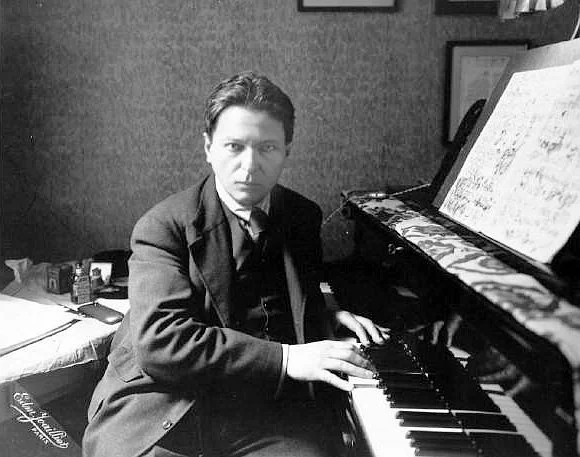
George Enescu
The work of George Enescu is a fascinating crossroads between French sophistication and the Romanian soul. A true “humanist” of the 20th century and mentor to Yehudi Menuhin, Enescu distilled in his chamber music an imaginary folklore that resonates like a persistent echo in every measure.
For this program, the Gerhard Quartet joins pianist Josu de Solaun. The only Spaniard to win the George Enescu International Competition, De Solaun is a leading interpreter of the Romanian composer. Together, they reveal the mastery of an author who seamlessly integrated tradition and avant-garde into music of overwhelming emotional depth.
piano quartet n. 1 d major, op.16 & piano Quintet a minor, op.29
Amy Beach: piano quintet
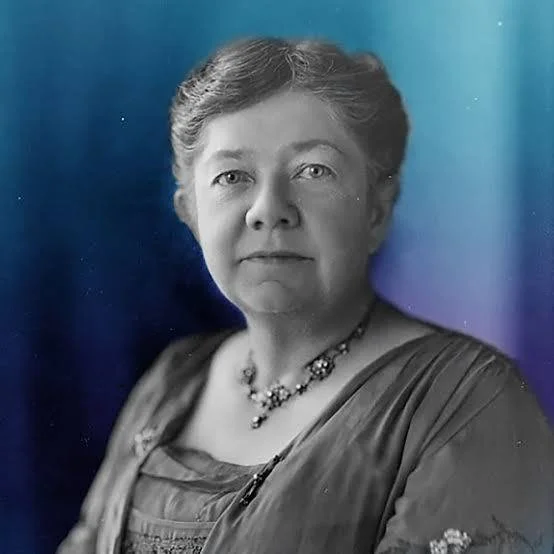
Amy Beach
Already enjoying several seasons of collaboration, the Gerhard Quartet and Judith Jáuregui consolidate their joint project in this program, which highlights their musical rapport and eagerness to perform together. With Amy Beach’s Quintet as the centerpiece, the program also includes Franz Liszt’s Six Consolations for solo piano and Piotr Ilyich Tchaikovsky’s Quartet No. 1.
Beethoven univers: 200 anniversary
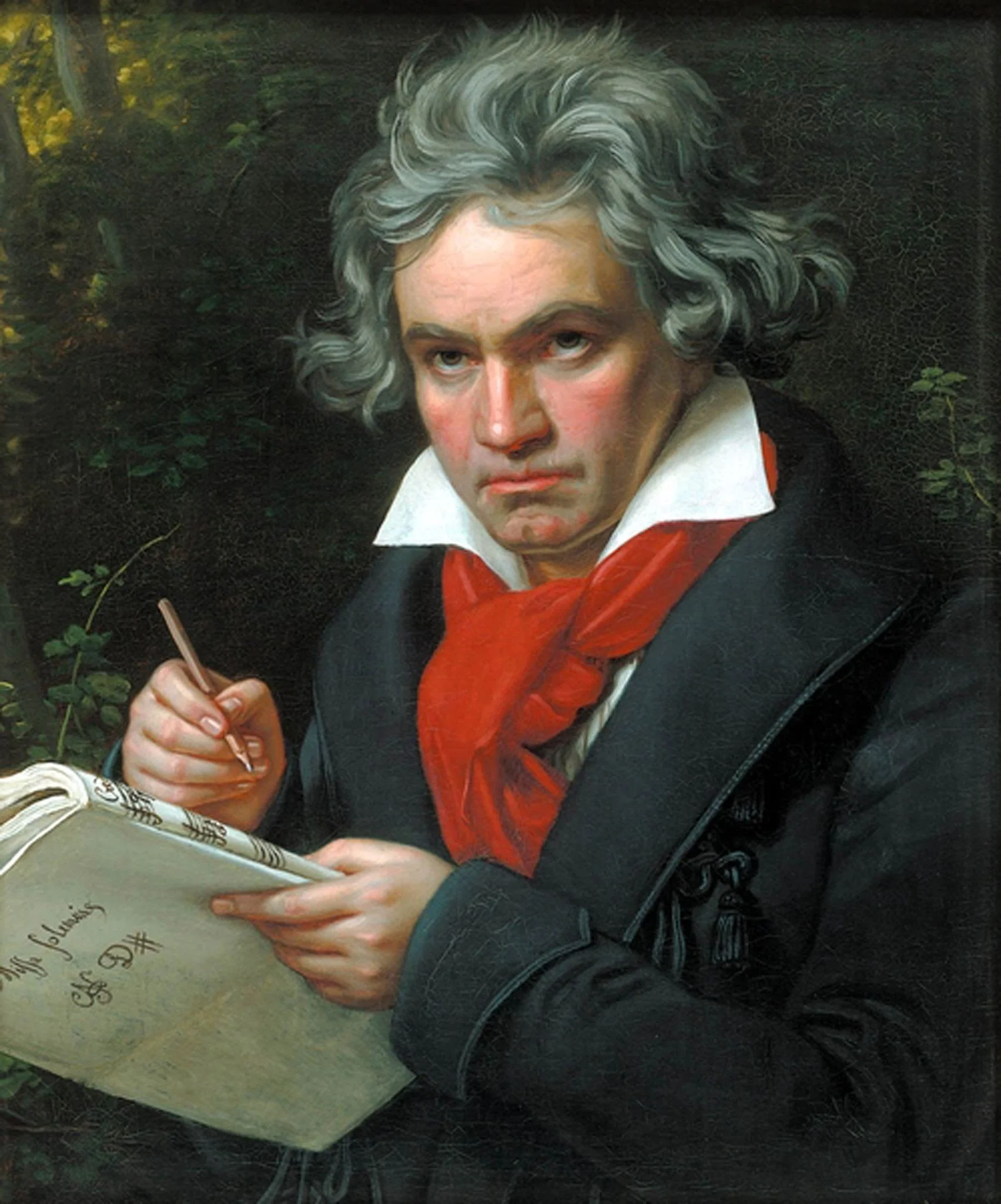
Late Beethoven challenged all music of the past and future. During this period of isolation and deafness, the genius from Bonn transcended conventions to create a language that remains visionary even today.
The String Quartet in C-sharp minor, Op. 131, is the supreme example of this revolution. Structured in seven connected movements performed without pause, the work breaks classical architecture to anticipate the avant-gardes of Arnold Schoenberg, which would not fully emerge until well into the 20th century. Particularly striking is the use of Sul ponticello in the fifth movement—a burst of metallic, almost ghostly humor—that reminds us of the composer’s absolute freedom.
Meanwhile, the String Quartet in E-flat major, Op. 127, marks the beginning of the late quartet cycle. It opens with a noble and solemn Maestoso, gradually moving into a joyous and infectious energy. Its second movement, an intimate Adagio, represents one of the pinnacles of Beethovenian humanism; here, the soul seems to expand beyond the limits of form, setting aside virtuosity in favor of Beethoven’s most human truth. The third movement is a Scherzo with a dotted rhythm, punctuated by murky contrasts and a dizzying trio, while the Finale is a rondo of popular, cheerful, and carefree character, concluding with a surprising and enigmatic coda.